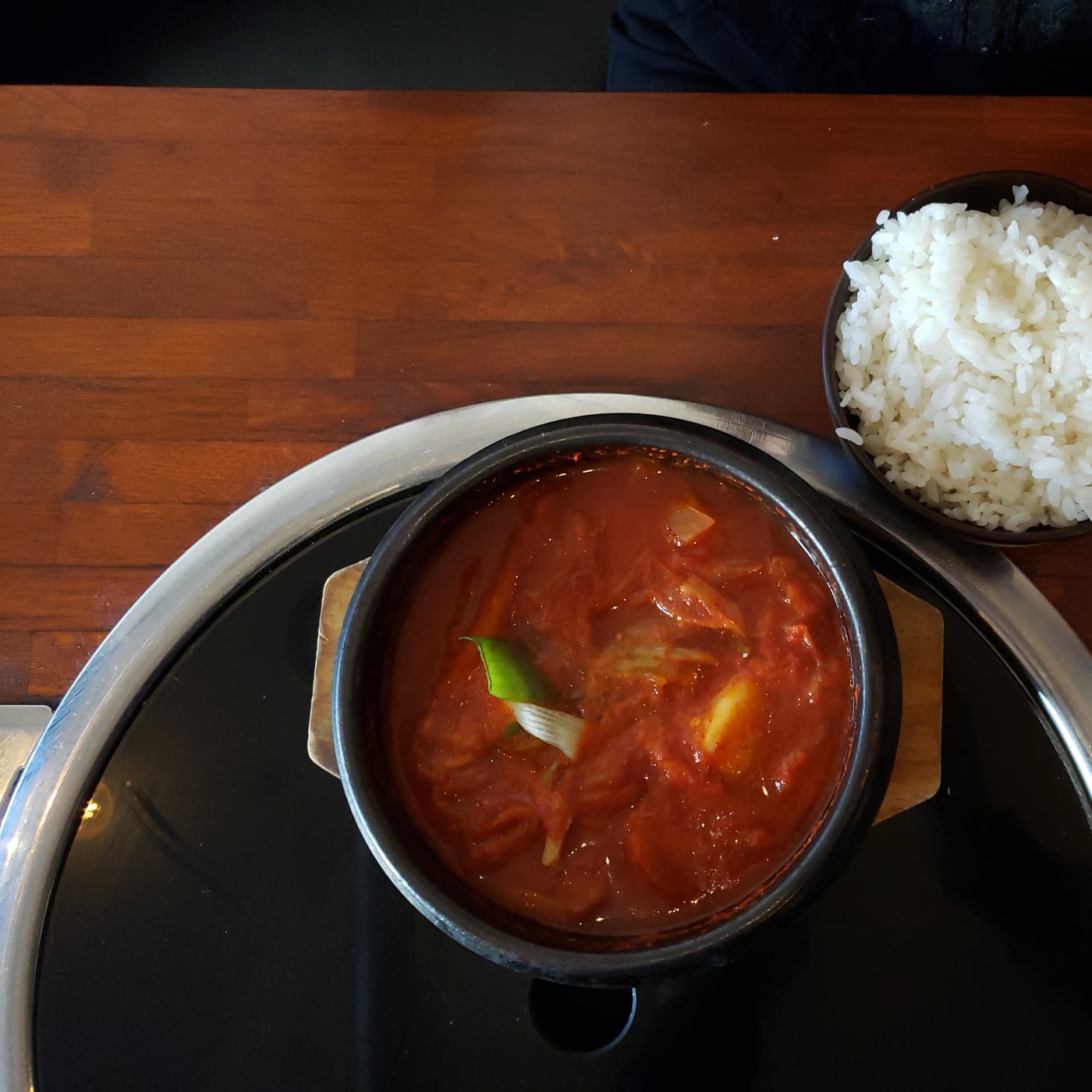
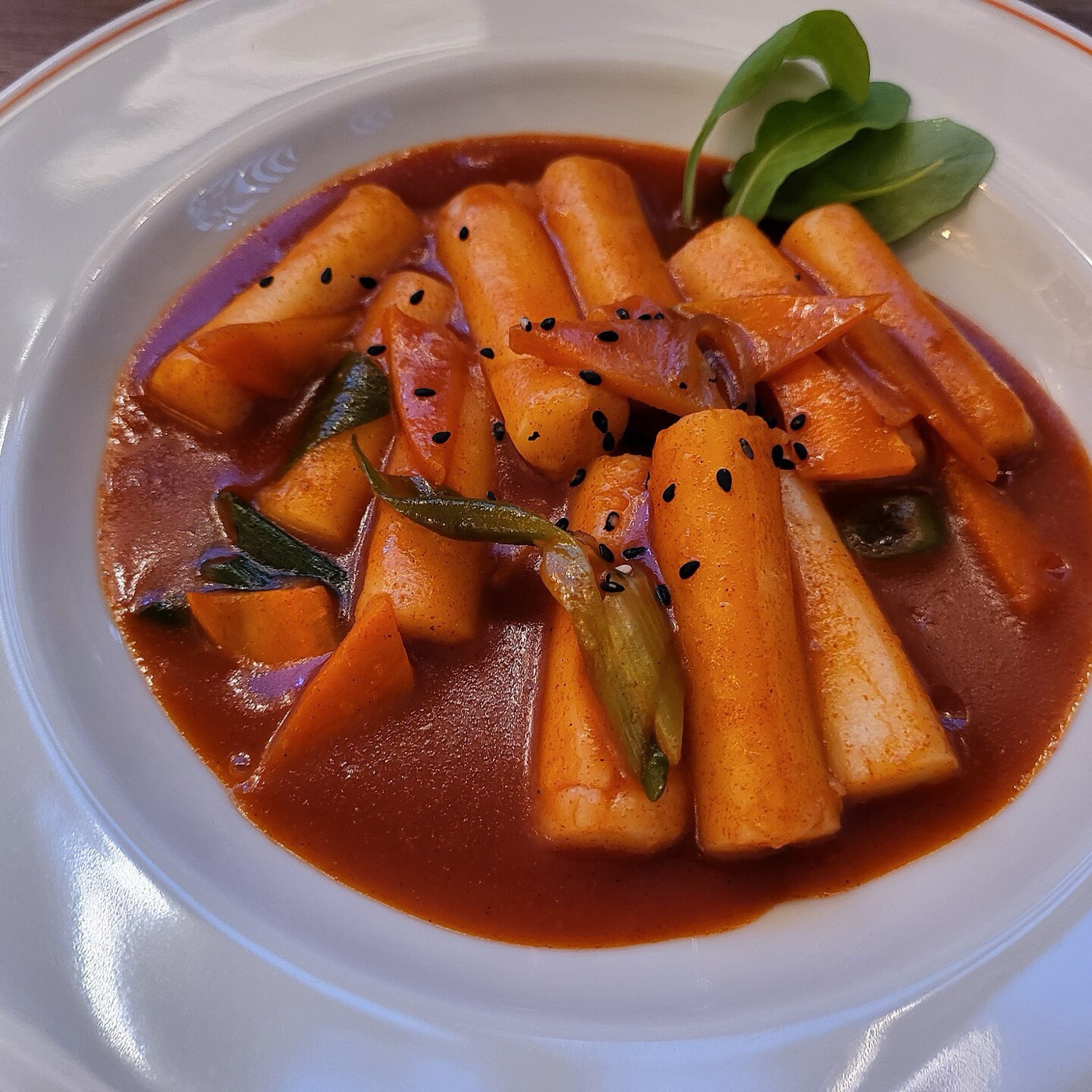
Gochujang (고추장) is a thick, glossy, brick-red paste of Korean chili powder, glutinous rice, fermented soybeans and salt, aged for months. The heat is moderate and builds slowly over a deep, sweet-savory, almost malty base. It is the backbone of tteokbokki sauce, bibimbap sauce, spicy pork bulgogi, ssamjang and Korean fried chicken glazes.
How to buy
Sold in red rectangular tubs (500 g and 1 kg) and squeeze tubes. The heat level is printed on the front on a 1–5 scale; level 3 (medium) suits most recipes. CJ Haechandle, Sempio and Chung Jung One are in most large US and UK supermarkets' international aisle, at H Mart and on Amazon. 'Brown rice' or 'taeyangcho' (sun-dried chili) on the label means a rounder flavor. Skip tubes labeled 'gochujang sauce': they are diluted, vinegared and much sweeter.
How to store
Unopened tubs keep in a cool pantry until the date on the lid. Once opened, press the film back over the surface, close tightly and refrigerate; it stays good for 1–2 years. Slow darkening and stiffening is normal. Discard it if you see fuzzy mold, smell alcohol or find liquid pooling on top.
Substitutes
- Red miso + chili: 1 tablespoon miso plus 1 teaspoon chili flakes and ½ teaspoon sugar per tablespoon of gochujang. Close fermented body, milder and less slow-burning.
- Sambal oelek or sriracha: ¾ the amount plus ½ teaspoon soy sauce and ½ teaspoon sugar. Sharper and thinner, no fermented sweetness.
- Ssamjang: same amount, but cut any doenjang in the recipe since ssamjang already contains it. Saltier, slightly less sweet.
How to use
Gochujang is salty and sweet as well as hot, so cut back on soy sauce and sugar when you add it. Loosen 1–2 tablespoons with water, rice wine or sesame oil before it meets the pan; straight from the tub it clumps and coats unevenly. For glazes and stir-fries, add it near the end over medium heat, because the rice and sugar scorch fast. One tablespoon seasons two servings of tteokbokki or a bowl of bibimbap.
By Mia Ko · Updated