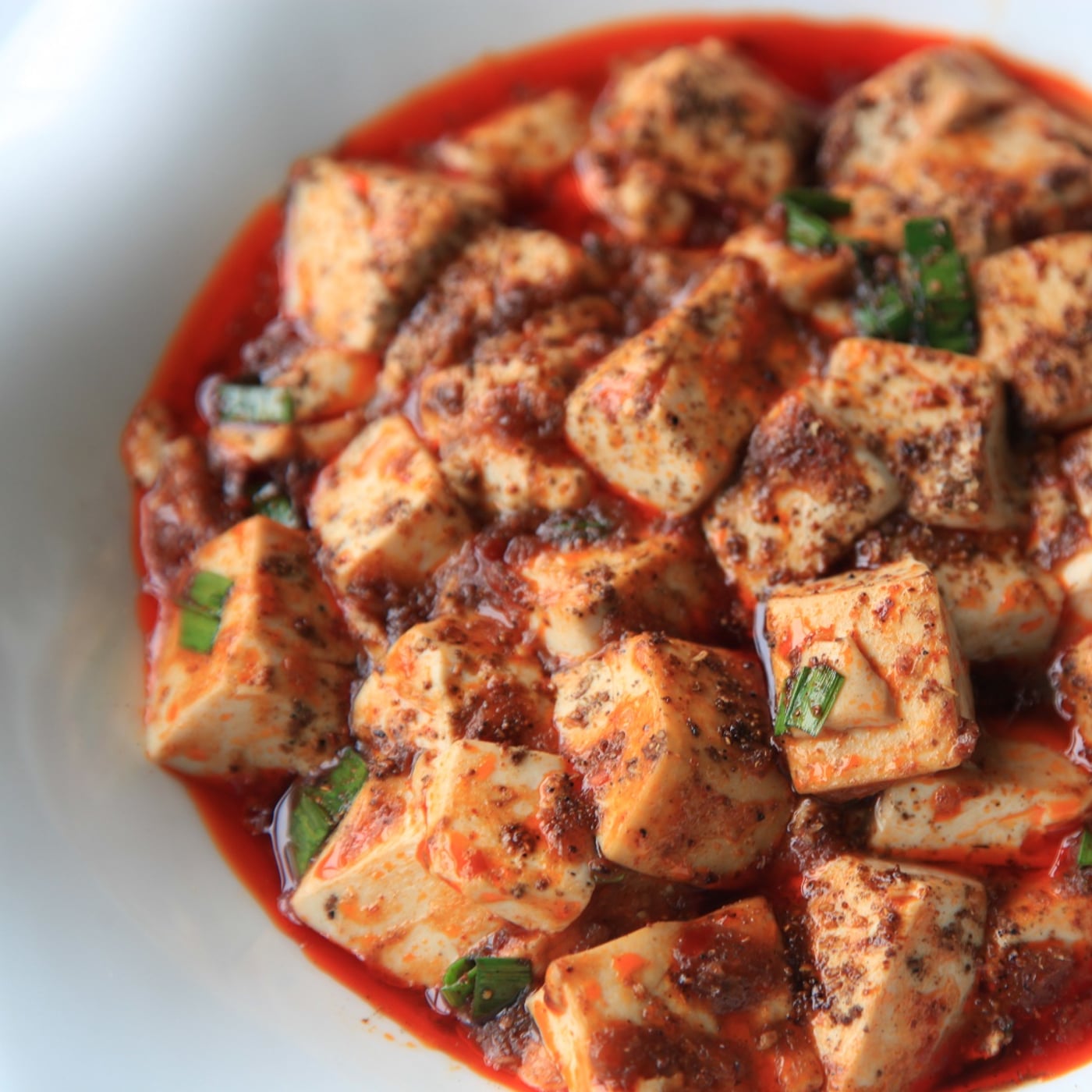
Real Sichuan mapo tofu: soft tofu blanched in salted water, crispy minced beef, Pixian chili bean paste, fermented black beans and a glossy two-stage cornstarch sauce, finished with toasted Sichuan pepper. Ready in 30 minutes.
Mapo tofu (麻婆豆腐, má pó dòu fu) is Sichuan's most famous tofu dish: cubes of soft tofu in a glossy, deep-red sauce built on fermented chili bean paste, dotted with crisp bits of fried minced beef and finished with a numbing hit of toasted Sichuan pepper. It is fiery, savory and warming in exactly the way you want once the evenings turn cool, and from start to finish it takes about 30 minutes. Spooned over a bowl of hot steamed rice, it is one of the most satisfying weeknight dinners you can make from a handful of pantry ingredients.
Three details separate a great mapo tofu from a mushy, one-note one. Blanching the tofu in lightly salted water first firms up the outside and seasons it, so the cubes hold together in the wok instead of crumbling. Frying the minced beef until it is genuinely crisp, then frying the Pixian doubanjiang slowly until the oil turns red, builds the deep, savory base the dish is known for. And thickening with the cornstarch slurry in two stages rather than all at once gives you a sauce that clings to the tofu without turning gluey. Grind the toasted Sichuan peppercorns right before serving, because their citrusy, tingling aroma fades fast.
The chili bean paste matters more than any other ingredient here. Look for Pixian (Pixian douban, 郫县豆瓣) from Sichuan, ideally one aged for a year or more; it is darker, less salty and far more fragrant than generic brands. Because the salt level varies a lot between jars, taste the sauce before you add the soy sauce and hold some back if needed.
Ingredients
- 600 g (1.3 lb) soft tofu (the firmer style of silken tofu, often labeled soft or medium-soft), cut into 2.5 cm (1-inch) cubes, plus 1 teaspoon salt for the blanching water
- 150 g (5 oz) ground beef, ideally 15 to 20 percent fat (ground pork also works)
- 3 tablespoons vegetable oil
- 2 tablespoons (about 40 g) Pixian doubanjiang (Sichuan fermented chili bean paste), roughly chopped if the beans are large
- 1 tablespoon fermented black beans (douchi), rinsed and roughly chopped
- 1 tablespoon Sichuan chili flakes or coarse chili powder, or to taste
- 3 garlic cloves, finely minced
- 1 tablespoon finely minced ginger
- 1 tablespoon Shaoxing wine
- 250 ml (1 cup) chicken stock or water
- 1 tablespoon light soy sauce
- 1 teaspoon sugar
- 1 1/2 tablespoons cornstarch mixed with 3 tablespoons cold water
- 1 1/2 teaspoons whole red Sichuan peppercorns, toasted and ground (or 1 teaspoon ready-ground)
- 3 stalks garlic sprouts (suan miao) or 3 scallions, cut into 2 cm (3/4-inch) lengths
- Steamed rice, to serve
Instructions
- Toast the Sichuan peppercorns in a dry skillet over low heat for 1 to 2 minutes, shaking the pan, until fragrant and just barely smoking. Cool, then grind in a spice grinder or mortar and sift out the papery husks if you like. Stir the cornstarch and cold water together in a small bowl and set both aside.
- Bring about 1 liter (4 cups) of water and 1 teaspoon salt to a bare simmer in a saucepan. Slide in the tofu cubes and keep the water at a gentle simmer, never a rolling boil, for 2 minutes. Turn off the heat and leave the tofu in the hot water until needed; this seasons it, firms it up and keeps it warm.
- Heat a wok or large skillet over medium-high heat. Add the oil and the ground beef and fry, breaking the meat up with a spatula, for 3 to 4 minutes, until it is deeply browned, crisp at the edges and the fat runs clear.
- Turn the heat down to medium-low. Add the doubanjiang and fry for 1 to 2 minutes, stirring constantly, until the paste smells rich and the oil turns a deep red. Add the fermented black beans, garlic, ginger and chili flakes and fry for another 30 seconds, until fragrant.
- Pour in the Shaoxing wine, then the stock, soy sauce and sugar. Stir and bring to a boil, then taste: it should be well seasoned but not harsh, since the tofu will dilute it.
- Lift the tofu out of its water with a slotted spoon, let it drain for a moment and slide it into the wok. Do not stir. Instead, push the tofu gently around with the back of a ladle so the cubes stay whole. Simmer over medium heat for 3 minutes so the tofu absorbs the sauce.
- Stir the slurry to recombine and drizzle about half of it around the edge of the wok, pushing the tofu gently for 30 seconds until the sauce begins to thicken. Add the remaining slurry and cook for another 30 seconds to 1 minute, until the sauce is glossy and clings to every cube. Add the garlic sprouts and cook for 30 seconds more.
- Slide everything into a warm serving bowl, sprinkle generously with the ground Sichuan pepper and serve at once with plenty of steamed rice.
Tips
- Tofu choice: soft tofu gives the classic silky texture, but if you are nervous about it breaking, start with medium-firm tofu; it is far more forgiving and still delicious. Very delicate dessert-style silken tofu will fall apart no matter how careful you are.
- Substitutions: ground pork is the traditional Chengdu choice and swaps in one for one. For a vegetarian version, replace the meat with 150 g finely chopped shiitake mushrooms fried until browned and use vegetable stock. If you cannot find fermented black beans, add an extra 1/2 tablespoon of doubanjiang instead.
- Heat and numbing are separate dials. The chili flakes control the heat and can be reduced or left out entirely; the Sichuan pepper controls the tingle. If your peppercorns are dull, they are stale, so buy a fresh bag from an Asian grocer and keep it in the freezer.
- Do not stir the tofu with a spatula at any point after it goes into the wok. Tilting the pan and nudging with the rounded back of a ladle is all it takes to coat the cubes, and this single habit is what keeps the dish from turning into a scramble.
- Storage: mapo tofu is best straight from the wok, but leftovers keep in an airtight container in the fridge for up to 2 days. Reheat gently in a pan over low heat with a splash of water, pushing rather than stirring, since the starch-thickened sauce loosens as it warms. It does not freeze well; the tofu turns spongy.
- What to serve with it: steamed jasmine rice is non-negotiable. Round out the meal with something cool and crisp such as smashed cucumber salad, plus a plate of stir-fried greens like garlic bok choy or a simple egg drop soup to tame the heat.
Nutrition
Nutrition information is an estimate only: about 330 kcal, 20 g protein, 23 g fat, 12 g carbohydrate per serving, without rice.
Tap an ingredient to check it off
Updated · Prefer us on Google