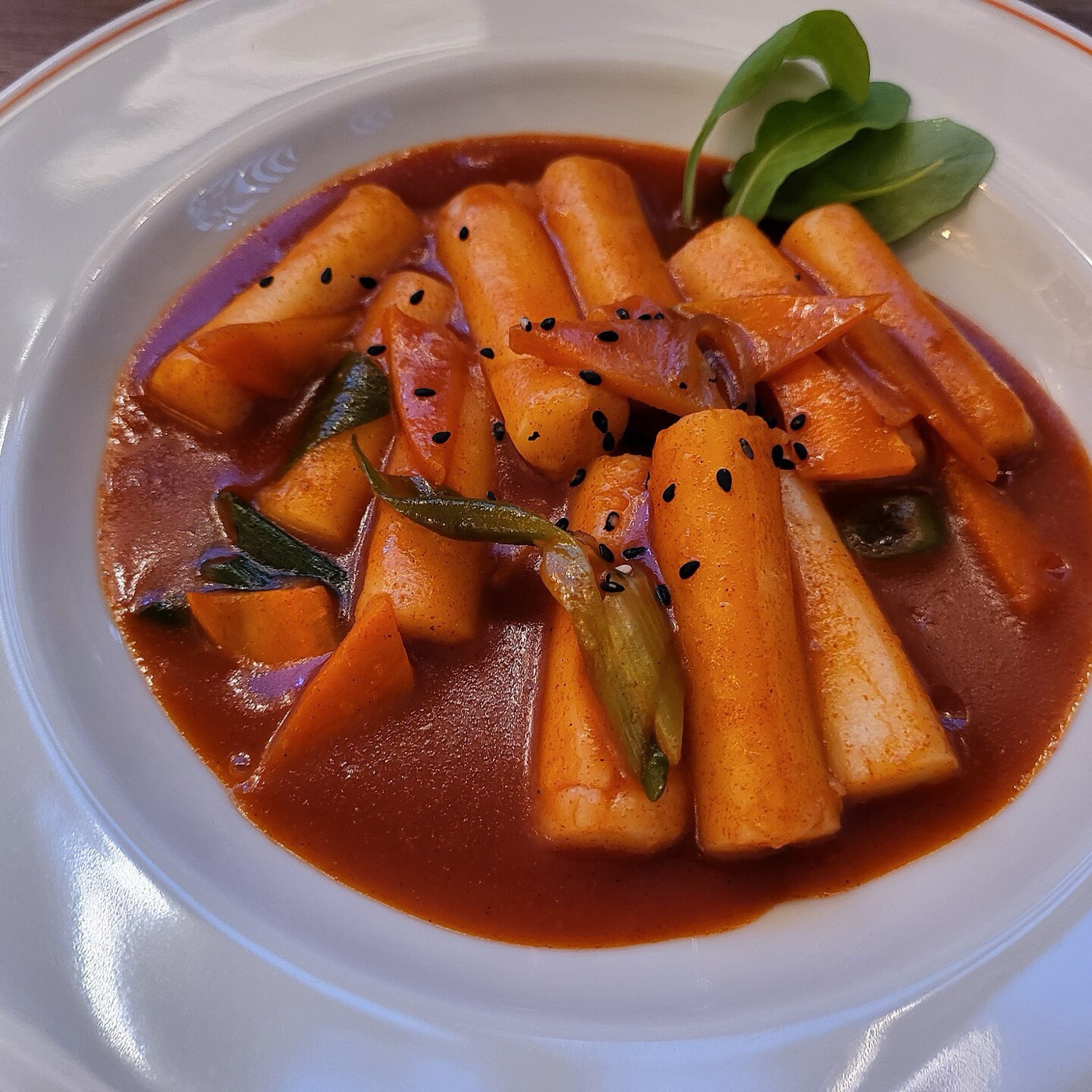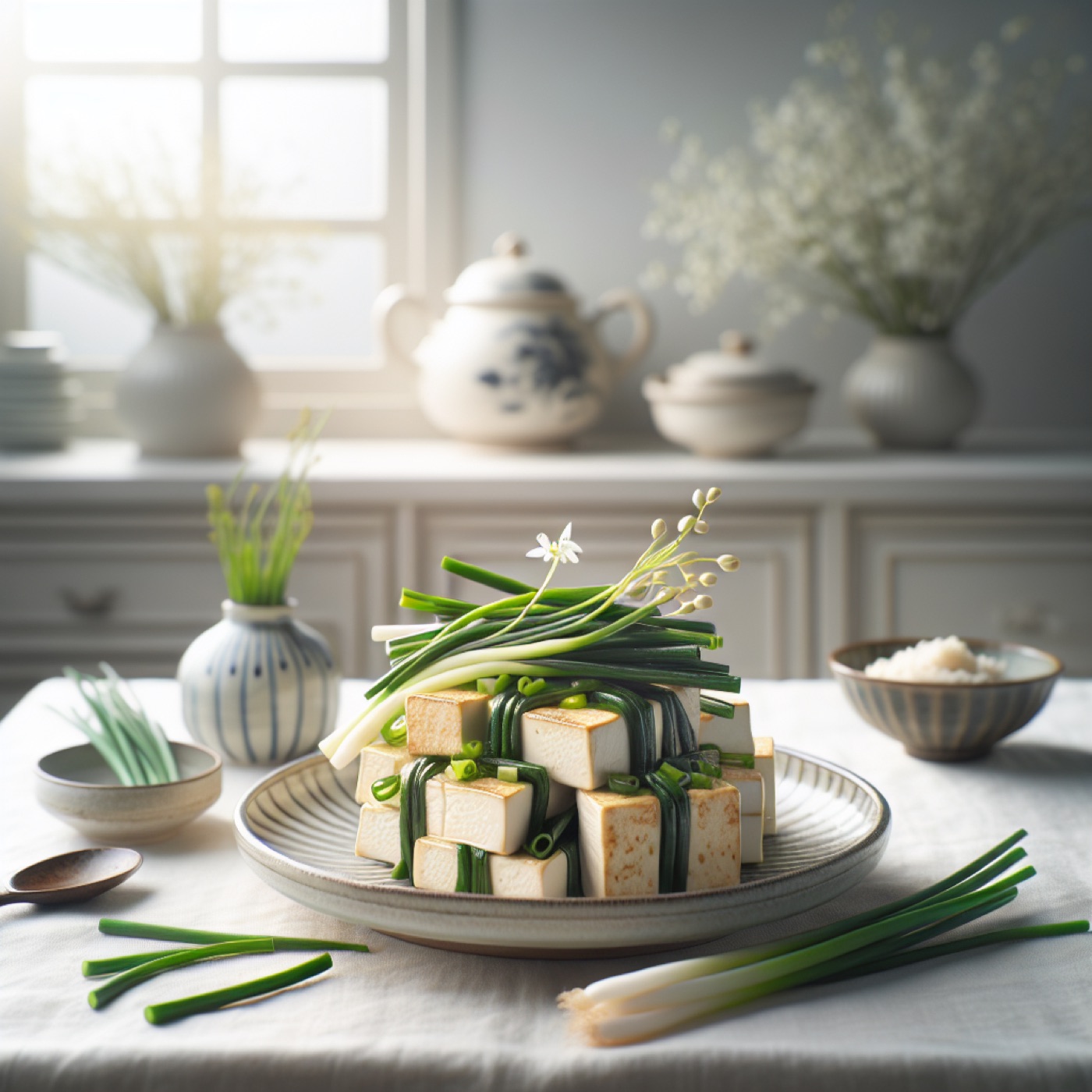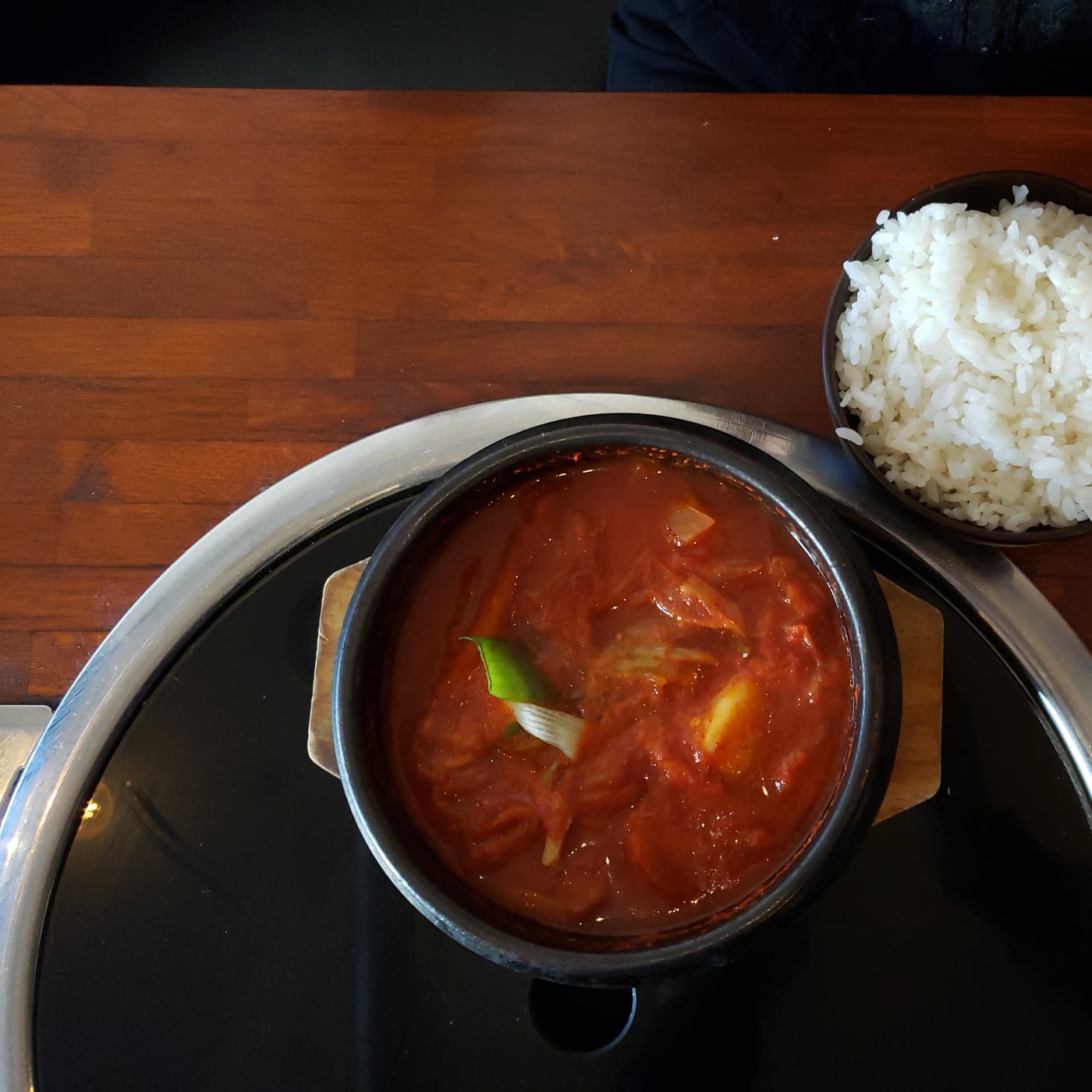
Bubbling Korean kimchi stew: sour, well-fermented kimchi fried in rendered pork belly fat, simmered with gochugaru, gochujang and anchovy stock, then finished with slabs of tofu. Ready in 45 minutes.
Kimchi jjigae (김치찌개) is Korea's everyday kimchi stew: sour, well-fermented kimchi simmered with pork belly and tofu until the broth turns deep red and fiery. It is the dish Korean families turn to as soon as the evenings cool down, because it is cheap, fast, and uses up the jar of kimchi that has gone too sour to eat on its own. A pot bubbling on the table next to a bowl of hot rice is autumn comfort in its simplest form.
Three things make this version work. First, the pork belly is rendered slowly before anything else goes in, so the stew is built on pork fat rather than plain oil. Second, the kimchi is fried in that fat for a full five minutes, which softens its bite and turns the fat red and fragrant. Third, the liquid is a quick anchovy and kelp stock rather than water, which gives the broth the savory depth you taste in a good Korean restaurant. If you skip the stock and use water, the stew is still very good, just a little lighter.
Ingredients
For the anchovy stock (optional)
- 900 ml (3 3/4 cups) water
- 8 large dried anchovies (about 15 g / 1/2 oz), heads and guts removed
- 1 piece dried kelp (dashima), about 5 x 5 cm (2 x 2 inches)
For the stew
- 400 g (14 oz) well-fermented, sour napa cabbage kimchi, cut into 3 cm (1 1/4-inch) pieces, plus 100 ml (scant 1/2 cup) kimchi juice from the jar
- 300 g (10.5 oz) skinless pork belly, sliced 1 cm (1/2 inch) thick and cut into 4 cm (1 1/2-inch) pieces
- 300 g (10.5 oz) firm tofu, cut into 1.5 cm (1/2-inch) thick slabs
- 1 small onion (about 150 g / 5 oz), thinly sliced
- 3 scallions, 2 cut into 4 cm (1 1/2-inch) lengths and 1 finely sliced for garnish
- 3 garlic cloves, minced
- 1 tablespoon rice wine (mirin or sake)
- 1 tablespoon gochugaru (Korean red chili flakes)
- 1 tablespoon gochujang (Korean red chili paste)
- 1 teaspoon sugar
- 1 tablespoon soy sauce (Korean soup soy sauce if you have it), plus more to taste
- 800 ml (3 1/3 cups) anchovy stock from above, or water
- 1 teaspoon toasted sesame oil, to finish
- Cooked short-grain rice, to serve
Instructions
- For the stock, combine the water, anchovies and kelp in a saucepan. Bring to a boil, then lower the heat and simmer gently for 10 minutes. Strain and measure out 800 ml (3 1/3 cups), topping up with water if you are short. If you are using plain water, skip this step.
- Set a heavy pot or Korean earthenware pot (ttukbaegi) over medium heat. Add the pork belly in a single layer and cook for 5 to 6 minutes, turning once or twice, until the fat has rendered and the edges are golden. Add the garlic and rice wine and stir for 1 minute.
- Add the kimchi and onion to the pork fat. Fry, stirring often, for 5 minutes, until the kimchi softens, the onion turns translucent and the fat in the pot turns red.
- Stir in the gochugaru, gochujang and sugar and cook for 30 seconds, until the paste is evenly distributed and smells toasty.
- Pour in the kimchi juice and stock. Bring to a boil, scraping the bottom of the pot, then reduce the heat to medium-low, cover and simmer for 15 minutes, until the kimchi is fully tender and the broth has turned a deep red.
- Lay the tofu slabs on top of the stew and spoon some broth over them. Simmer uncovered for 5 minutes so the tofu heats through and absorbs the flavor without breaking up.
- Taste the broth. Add the soy sauce, then a little more soy sauce or a pinch of salt if it needs it, or another pinch of sugar if the kimchi was very sour. Add the scallion lengths and cook for 1 more minute.
- Turn off the heat, drizzle with the sesame oil and scatter the sliced scallion on top. Bring the pot to the table still bubbling and serve with bowls of hot rice.
Tips
- The stew is only as good as the kimchi. Use kimchi that is at least 3 to 4 weeks old and tastes sharp and sour. If yours is still fresh and crunchy, add 1 teaspoon of rice vinegar and an extra 1/2 teaspoon of sugar to mimic that fermented tang.
- No pork belly? Thinly sliced pork shoulder works well. A can of tuna in oil (drained) added with the stock gives you chamchi kimchi jjigae, another Korean classic, and a handful of sliced shiitake mushrooms with vegetable stock makes it vegetarian.
- If you do not want to make the stock, 1 teaspoon of Korean beef stock powder (dashida) or a Japanese dashi packet dissolved in 800 ml (3 1/3 cups) of water gets you close.
- For a milder stew, cut the gochugaru to 1/2 tablespoon; for extra heat, add a sliced green chili with the scallions. The gochujang adds body and sweetness more than heat, so keep it as written.
- Kimchi jjigae keeps in the fridge for up to 3 days and tastes even better the next day. Freeze the stew without the tofu for up to 1 month; thaw, reheat, and add fresh tofu for the last 5 minutes.
- Serve with steamed short-grain rice, a plate of gim (roasted seaweed) and a mild side such as steamed egg (gyeran-jjim) or blanched spinach to cool the heat. A block of instant ramyeon noodles dropped in for the last 3 minutes turns leftovers into a meal on their own.
Nutrition
Nutrition information is an estimate only: about 490 kcal, 17 g protein, 43 g fat, 10 g carbohydrate per serving, without rice.
Tap an ingredient to check it off
Updated