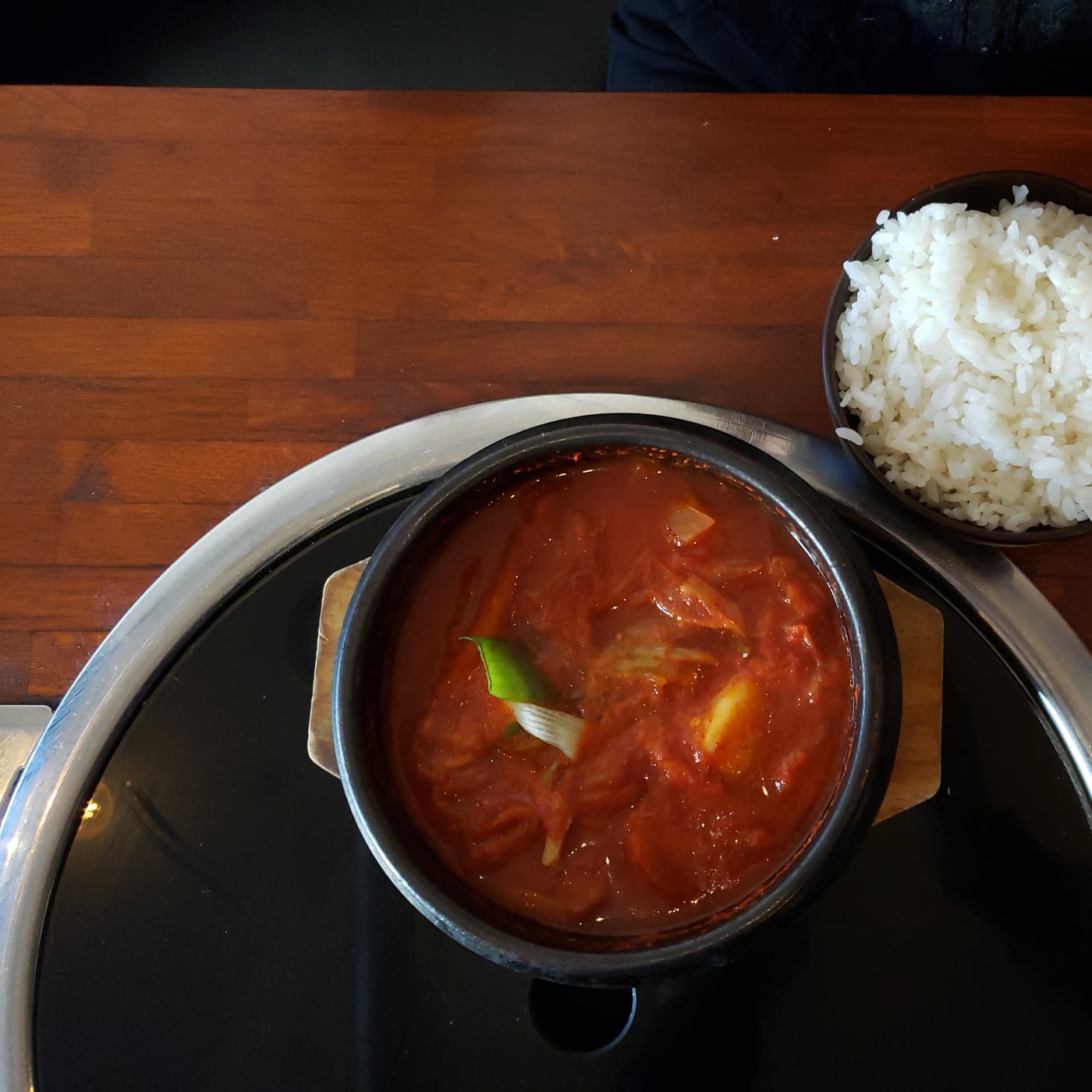
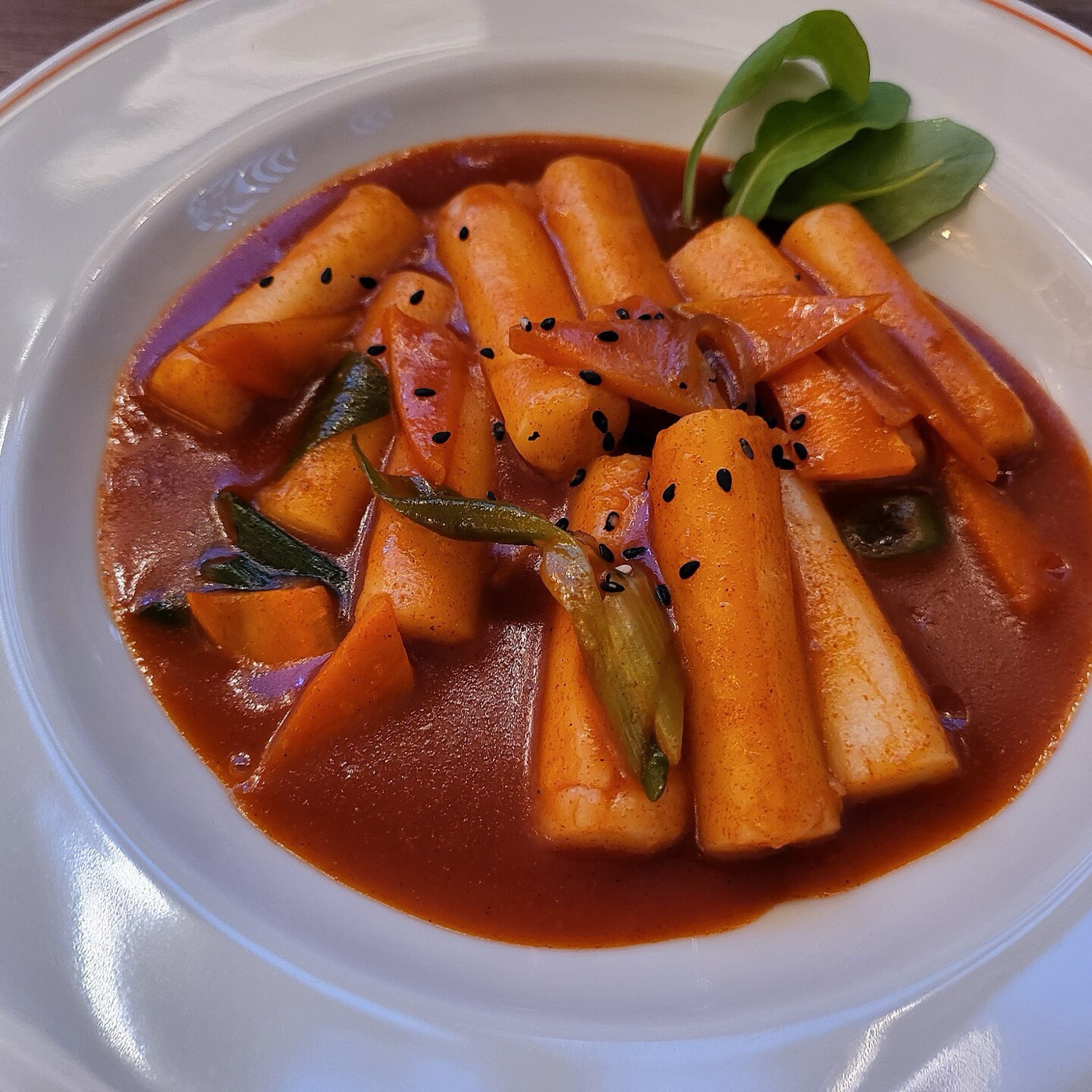
Gochugaru (고춧가루) is Korean red chili dried and ground without seeds, so it is vivid red, slightly sweet and smoky, and only medium-hot, roughly cayenne cut with paprika. It comes in two grinds: coarse (굵은 고춧가루), flaky like crushed red pepper, used for kimchi, tteokbokki and stir-fries; and fine (고운 고춧가루), a soft powder that dissolves into stews, gochujang and dipping sauces and gives them deep color without grit.
How to buy
Look for bags labeled 'gochugaru' or 'red pepper powder' with the grind stated: 'coarse' for most recipes, 'fine' for soups and sauces. Buy 'taeyangcho' (태양초, sun-dried) if you can; it tastes fruitier than machine-dried. Good color is bright brick red, not brown. In the US and UK it is at H Mart and Korean grocers, in many Whole Foods and larger supermarkets, and online from Mother-in-Law's, Wang or Nongshim in 1 lb bags. Do not buy Indian or Kashmiri chili powder or regular crushed red pepper by mistake: both are far hotter and seed-heavy.
How to store
Chili flakes lose color and aroma fast in light and warmth. Keep the bag sealed in the freezer, where it stays bright for a year or more; a small jar in the fridge for daily use is fine for 2–3 months. Faded orange-brown color, a flat smell or clumping from moisture mean it is past its best. It will not make you sick, but your kimchi will look dull.
Substitutes
- Crushed red pepper flakes + sweet paprika: ½ teaspoon crushed red pepper plus 1½ teaspoons paprika per 2 teaspoons gochugaru. Matches heat and color; loses the fruity, smoky note and the seeds add bitterness.
- Aleppo pepper or Kashmiri chili powder: 1:1. Aleppo is close in heat and fruitiness but darker; Kashmiri is brighter and milder, so add a pinch of cayenne.
- Cayenne: ⅓ the amount, plus paprika for color. Heat only, no sweetness or body.
How to use
Coarse flakes need liquid and time to bloom: rub them into salted cabbage for kimchi, or stir into a stew base for a few minutes before it comes to a boil. For a quick sauce, mix fine gochugaru with a little water or oil first so it does not clump. A tablespoon per 2 servings gives medium heat in tteokbokki or sundubu jjigae; it is mild enough to use 3–4 tablespoons in a batch of kimchi. Do not toast it dry in a hot pan: it scorches and turns bitter within seconds.
By Mia Ko · Updated