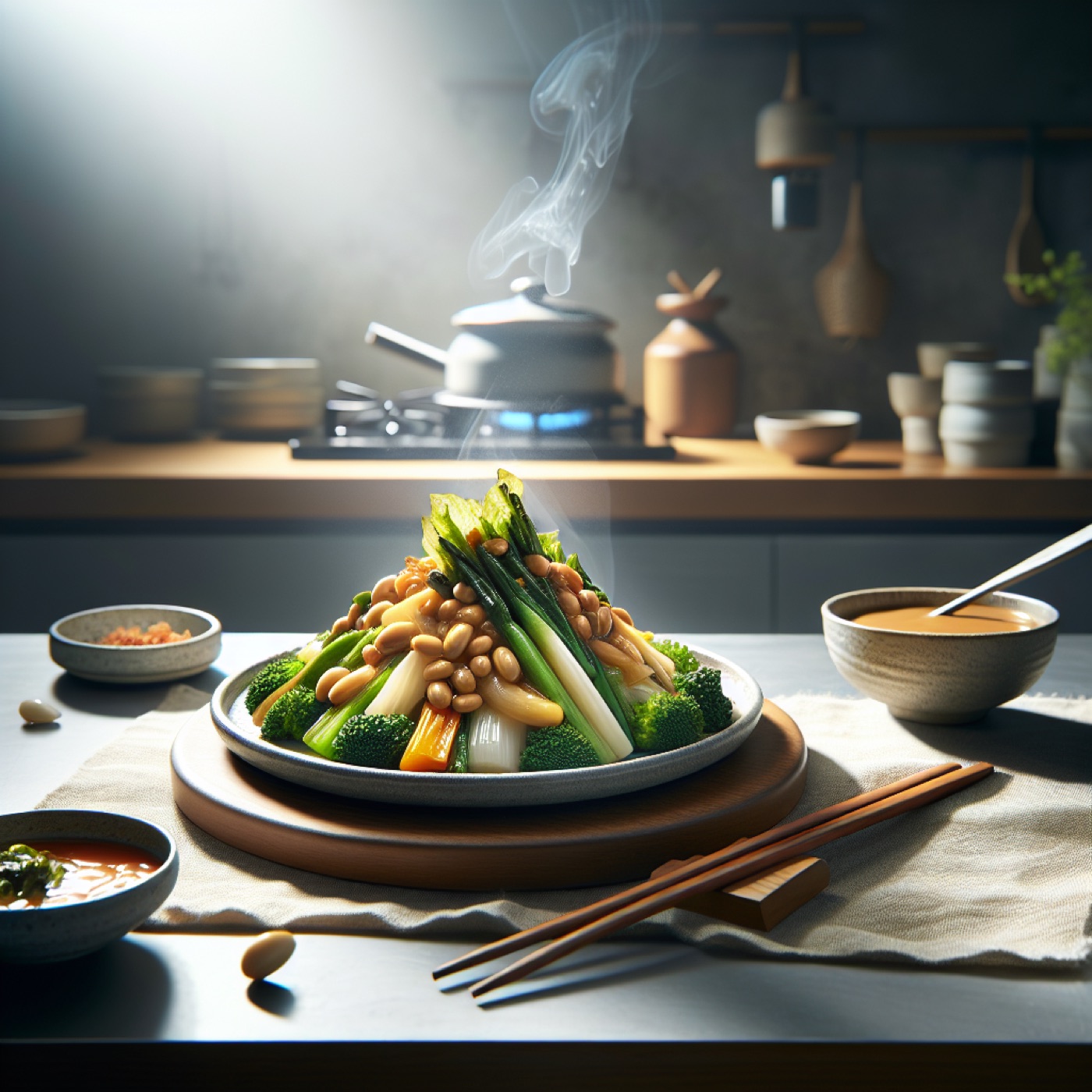
Doenjang (된장) is a coarse, dark brown paste made from soybeans fermented with salt, traditionally as a by-product of soy sauce. It is deeply savory, salty and pungent, with a funky, almost cheesy edge. It is often compared to miso, but doenjang is saltier, chunkier, made without rice or barley koji, and holds up to long boiling, which miso does not. It seasons doenjang jjigae, ssamjang for lettuce wraps, and the doenjang dressing on Korean vegetable salads.
How to buy
It comes in brown or tan plastic tubs (500 g and 1 kg) and is easy to confuse with gochujang's red tubs and ssamjang's green ones. Look for '된장' or 'soybean paste' and a short ingredient list: soybeans, salt, water; some add wheat or flour, which makes them milder. CJ Haechandle, Sempio and Chung Jung One are at H Mart and most Asian grocers in the US and UK, and on Amazon. 'Jaeraesik' (재래식, traditional) doenjang is stronger and better in stews; 'brown rice' or 'mild' versions suit dressings.
How to store
Unopened, it keeps in the pantry until the printed date. After opening, press the film back onto the surface, close tightly and refrigerate; it lasts a year or more and its flavor deepens. A darker top layer or a little clear liquid is normal; stir it in. White specks are usually salt or harmless yeast, but throw it out if you see fuzzy green or black mold or it smells of alcohol.
Substitutes
- Red miso (aka or hatcho): use 1½ times the amount and add it at the end of cooking. Closest flavor, but sweeter, smoother and less pungent; it separates and dulls if boiled long.
- Chinese yellow soybean paste (huangdoujiang): 1:1. Similar saltiness and body, less funk and a slightly sweeter, wheatier taste.
- Ssamjang: use ¾ the amount and skip any gochujang, garlic or sugar in the recipe. Sweeter and spicier, works only in dips and dressings, not stews.
How to use
Doenjang is very salty, so start with 1 tablespoon per 2 cups of stock for a stew and do not add soy sauce until you have tasted it. Unlike miso, it wants to be simmered: add it early and let it bubble for 10–15 minutes so the raw funk mellows. Push it through a sieve or whisk into a ladle of hot broth so the lumps dissolve. For a quick ssamjang, mix 2 tablespoons doenjang with 1 tablespoon gochujang, a teaspoon each of sesame oil, honey and minced garlic.
By Mia Ko · Updated