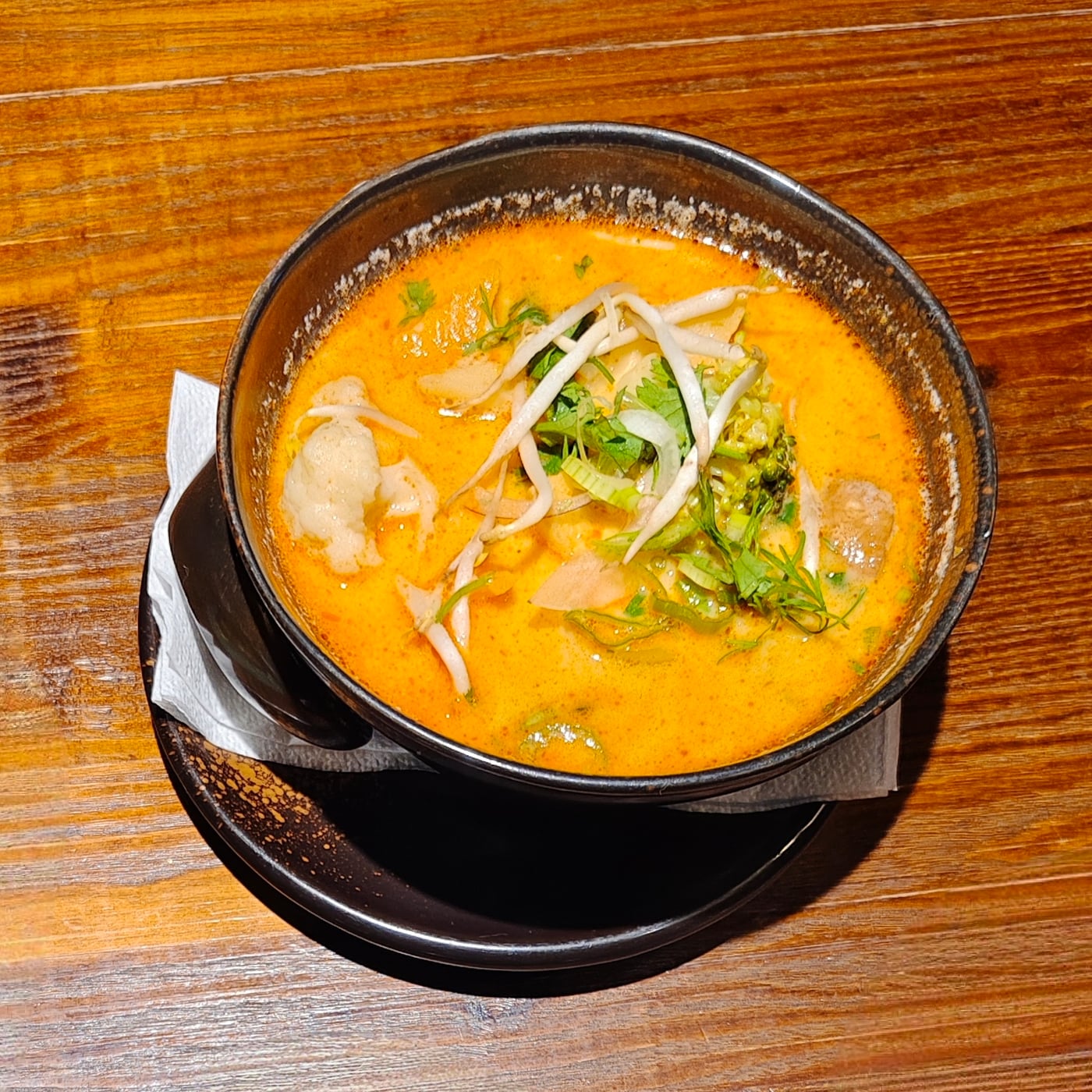
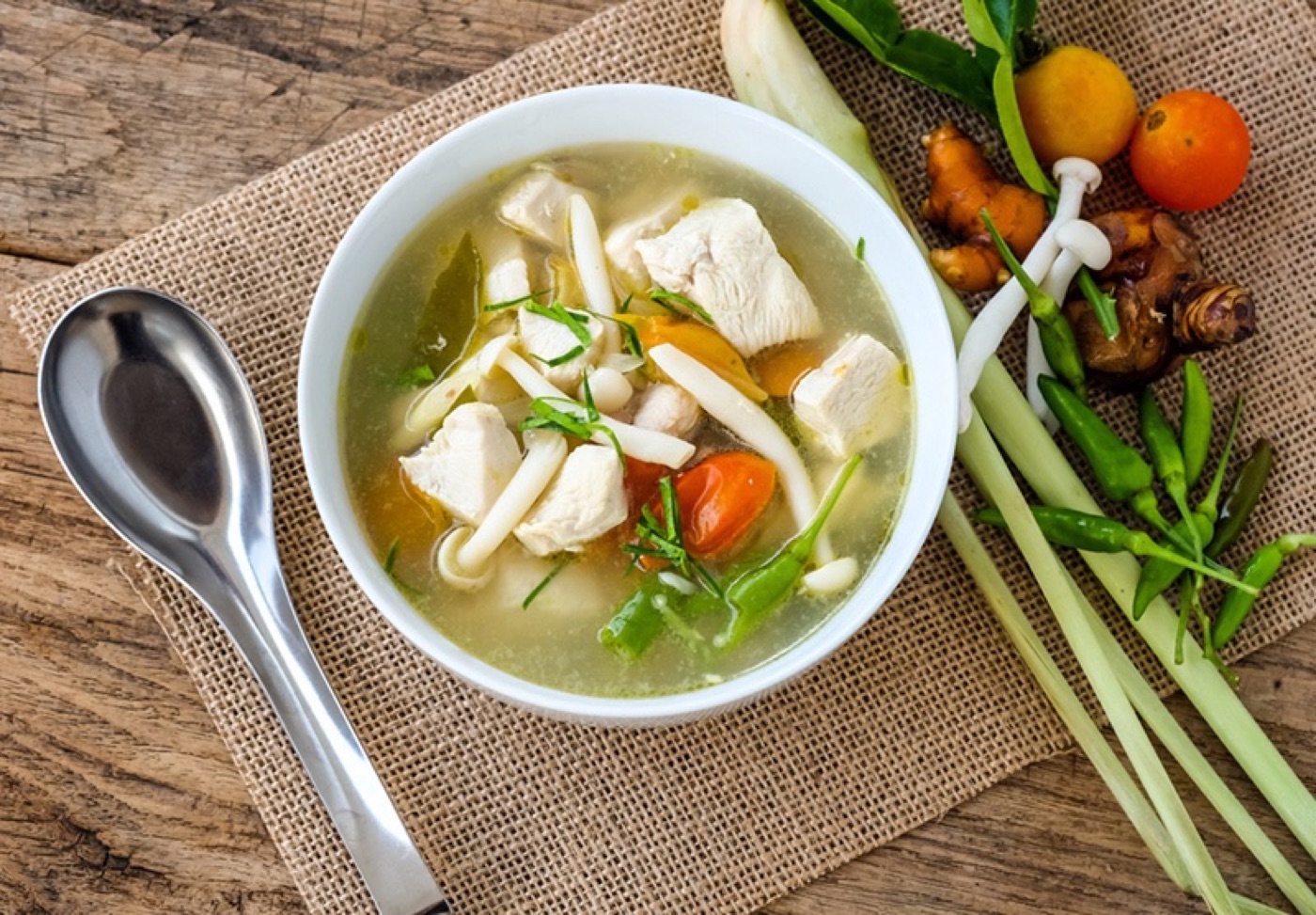
Galangal (Thai kha, ข่า; Indonesian laos or lengkuas) is a rhizome from the same family as ginger, but it cooks nothing like it. The skin is pale pink-and-cream with thin dark rings, the flesh is hard and almost woody, and the flavor is sharp, piney and citrusy with a hint of pepper and pine sap, not the warm, sweet heat of ginger. It is essential in tom yum, tom kha gai, Thai red and green curry pastes, Indonesian rendang and soto, and Malaysian laksa.
How to buy
Fresh galangal is sold by the piece at Thai and Vietnamese grocers and larger Asian supermarkets (H Mart, 99 Ranch, Wing Yip in the UK), occasionally at Whole Foods. Pick firm, heavy pieces with smooth, glossy skin; young pinkish rhizomes are more tender and easier to slice. If you cannot find fresh, frozen sliced galangal is nearly as good and is what many Thai restaurants use. Dried slices and powder are a last resort: they taste flat and dusty and cannot be eaten in a soup.
How to store
Wrap fresh galangal loosely in paper towel inside a bag and refrigerate for 2–3 weeks; it slowly dries out rather than rotting. For long storage, slice it into coins and freeze in a zip bag for 6 months—frozen coins go straight into the pot and are actually easier to cut than fresh. Discard pieces that are soft, moldy or smell musty. Dried galangal keeps for a year in a sealed jar.
Substitutes
- Fresh ginger + lime zest: same weight of ginger plus the zest of ¼ lime, and a small pinch of black pepper. Warmer and sweeter, you lose the piney sharpness, but the soup still tastes Thai.
- Frozen or dried galangal: frozen 1:1; dried, use half the weight and soak 20 minutes first. Dried loses most of the citrus top note.
- Galangal paste (jar): 1 teaspoon per 3 slices of fresh. Convenient in curry pastes; muted and slightly sour in clear soups.
- Fingerroot (krachai): 1:1 in curries and stir-fries. Earthier and more medicinal, closer to Thai jungle curry than tom kha.
How to use
Do not peel it—the skin is thin and flavorful—just scrub and slice it into thin coins across the grain with a heavy knife. For soups, bruise 5–6 coins and add them with the lemongrass at the start; they infuse, but are left on the side of the bowl, not eaten. For curry paste, slice it very thin and pound or blend it first with a pinch of salt before adding softer ingredients, because it is the toughest thing in the mortar. Never swap it 1:1 for ginger in a stir-fry: raw galangal stays fibrous and hard however long you cook it.
By Mia Ko · Updated