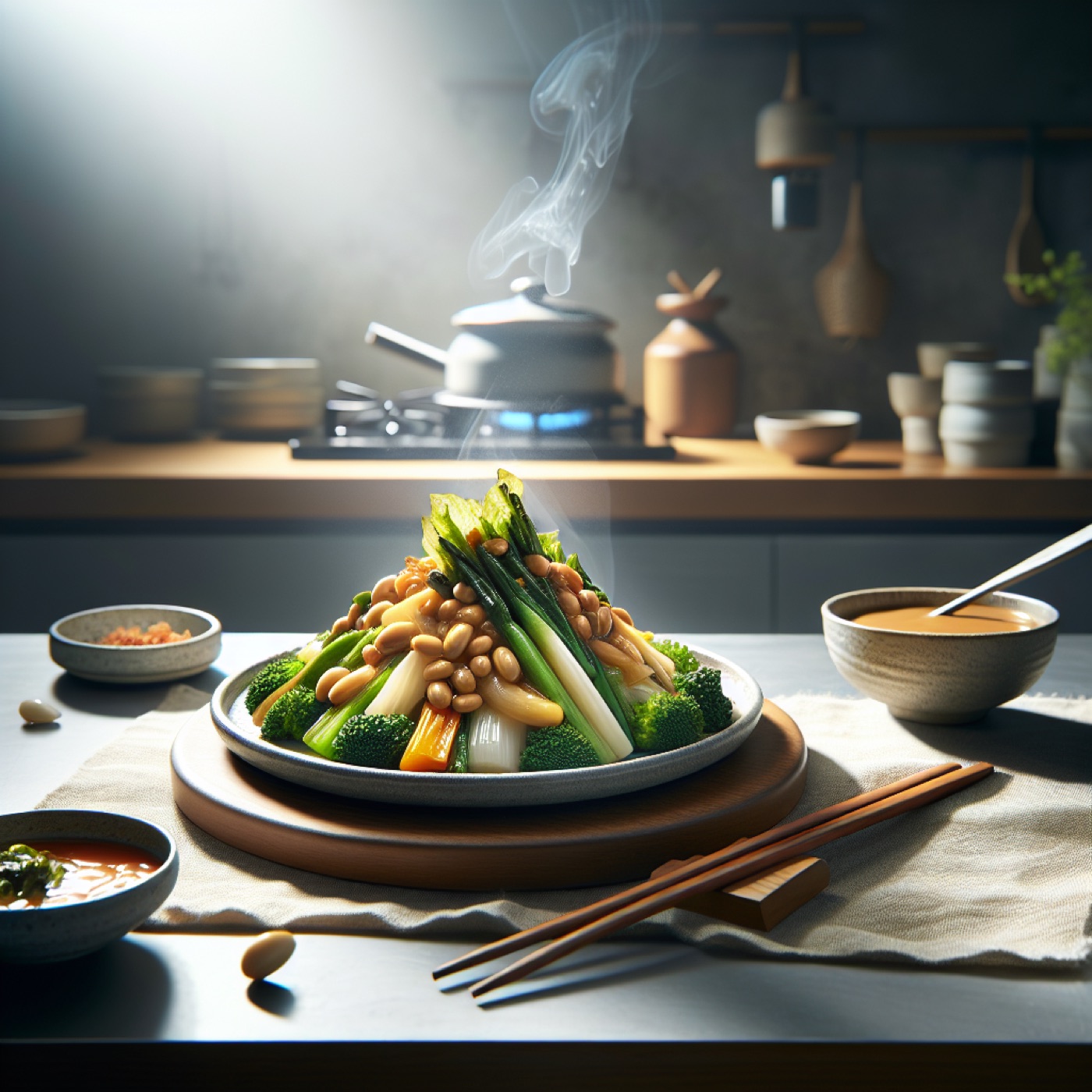
Colorful bibimbap with separately seasoned spinach, carrot, zucchini and bean sprouts, soy-marinated beef, fried eggs and plenty of gochujang. Serves 4 in 35 minutes.
This spring bibimbap layers fresh seasonal vegetables with traditional Korean flavors for a bowl that is bright, colorful and full of texture. Each vegetable is seasoned separately, the beef is quickly marinated in soy sauce, sesame oil and garlic, and the rice is cooked from scratch, so every component tastes its best before it all gets stirred together with gochujang. A healthy, satisfying main course for the whole family.
Advertisement
Ingredients
- 2 cups short-grain rice
- 2 1/2 cups (600 ml) water
- 100 g (about 3 1/2 oz) spinach
- 1 carrot, cut into thin matchsticks
- 1 zucchini, cut into thin matchsticks
- 100 g (about 1 cup) bean sprouts
- 200 g (7 oz) thinly sliced beef
- 4 eggs
- 4 tablespoons gochujang (Korean red chili paste)
- 2 tablespoons soy sauce
- 2 tablespoons toasted sesame oil
- 2 garlic cloves, minced
- Salt, to taste
- Ground black pepper, to taste
- 2 tablespoons toasted sesame seeds
Advertisement
Instructions
- Combine the rice and water in a pot or rice cooker and cook until tender. Keep warm.
- Blanch the spinach in boiling water, rinse under cold water and squeeze out the excess moisture. Toss with a little sesame oil and salt.
- Stir-fry the carrot and zucchini separately in a little oil until just tender, seasoning each with salt and pepper.
- Blanch the bean sprouts, rinse under cold water and drain. Toss with salt and a little of the minced garlic.
- Marinate the beef in the soy sauce, sesame oil and remaining garlic for 10 minutes, then cook in a hot skillet until browned and cooked through.
- Fry the eggs sunny-side up and set aside.
- Divide the rice among four bowls and arrange all the prepared toppings on top. Add the gochujang and mix to taste just before eating.
- Sprinkle with toasted sesame seeds for extra flavor.
Tips
- Adjust the amount of gochujang to suit your spice preference.
- Add other seasonal vegetables such as shiitake mushrooms or green bell pepper for extra nutrition and color.
Nutrition
Calories: about 450 per serving | Protein: 18 g | Carbs: 56 g | Fat: 18 g
Tap an ingredient to check it off
Updated