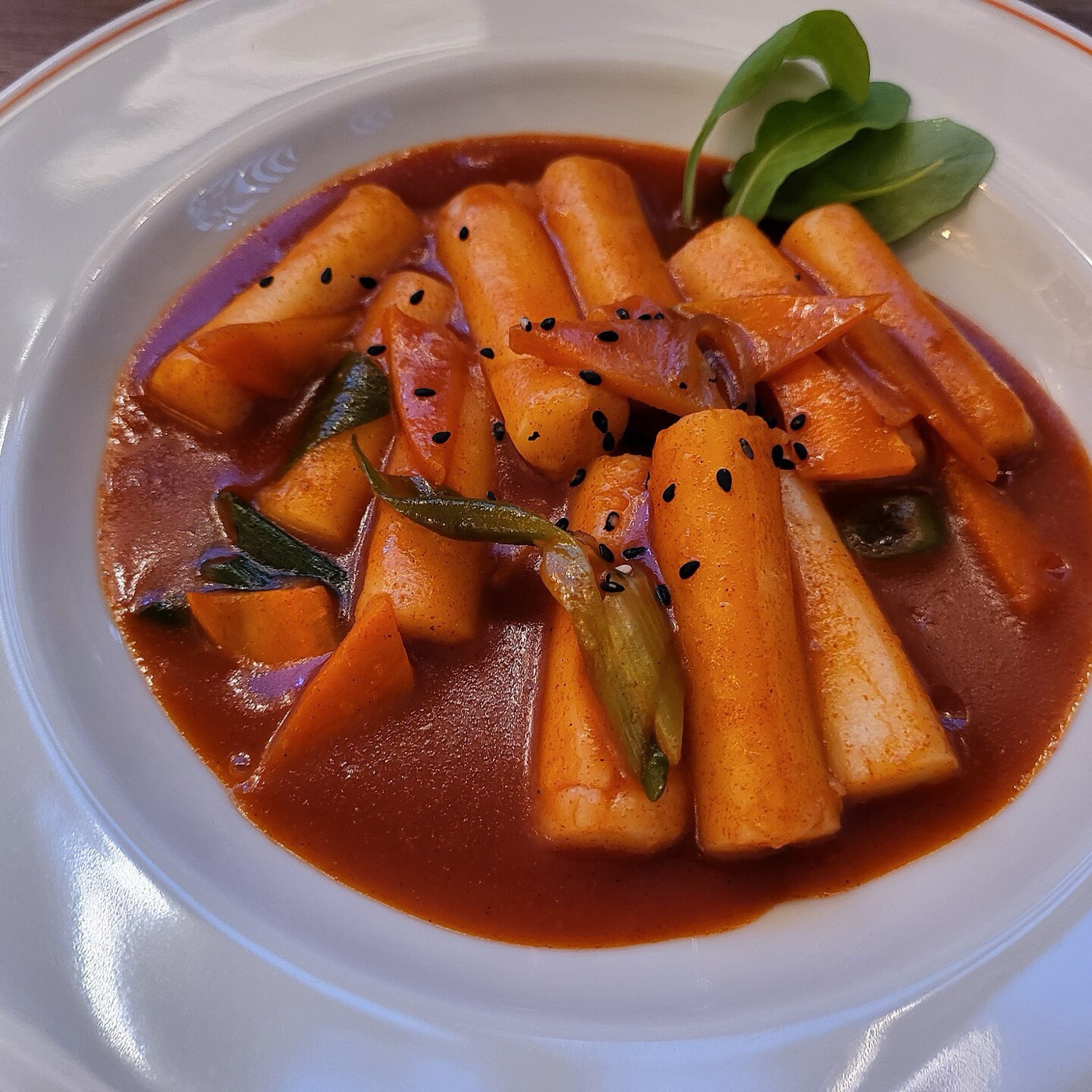
Tteok (떡) is the general Korean word for rice cake; in savory cooking it usually means garae-tteok (가래떡), plain cylinders of steamed, pounded short-grain rice. Cut into finger-length logs they are tteokbokki tteok, cooked in spicy gochujang sauce or cheese sauce; sliced into thin ovals they are tteokguk tteok for New Year soup or as a chewy add-in to stews, army stew and stir-fries. Fresh, they are soft and springy; the point is the chew, not flavor, which is mild and slightly sweet like plain rice.
How to buy
Three forms: fresh from the refrigerated case at Korean grocers (softest, best within 2 days), vacuum-packed bags (most common; firm, needs soaking), and frozen (keeps longest). Rice-flour tteok (쌀떡) stays chewy; wheat-flour versions (밀떡) are softer and cheaper. In the US and UK look for Pulmuone, CJ or store brands at H Mart, Asian supermarkets and the international aisle of Whole Foods, Tesco and Sainsbury's; 1 lb feeds 2–3 for tteokbokki.
How to store
Fresh tteok hardens within a day at room temperature and in a few days in the fridge, so eat it fast or freeze it flat in a zip bag for up to 3 months. Unopened vacuum packs keep in the fridge until the date on the bag, often 1–2 months; once opened, use within 3–4 days or freeze. A sour smell, slimy surface or pink or gray spots mean it is done. Hard and cracked is fine; it just needs soaking.
Substitutes
- Shanghai rice cakes (nian gao slices) or thick fresh rice noodles: 1:1. Same chew and starch; nian gao ovals are thinner, so cook them 1–2 minutes less.
- Gnocchi: 1:1 by weight, boiled separately and added at the end. Soft rather than chewy but soaks up sauce well.
- Fish cakes (eomuk) or ramen noodles: not a texture match, but the standard way to bulk out tteokbokki when rice cakes run short.
How to use
Vacuum-packed or frozen tteok stays hard in a quick sauce, so soak it in warm water for 20–30 minutes (cold water for an hour) until the pieces separate and bend slightly, then drain. Fresh tteok needs no soaking. Add rice cakes to the simmering sauce and cook 4–6 minutes, stirring so they do not stick; they are done when a piece is soft all the way through with no chalky center. Leftover tteokbokki sets hard in the fridge; reheat it with a splash of water over low heat and it softens again.
By Mia Ko · Updated