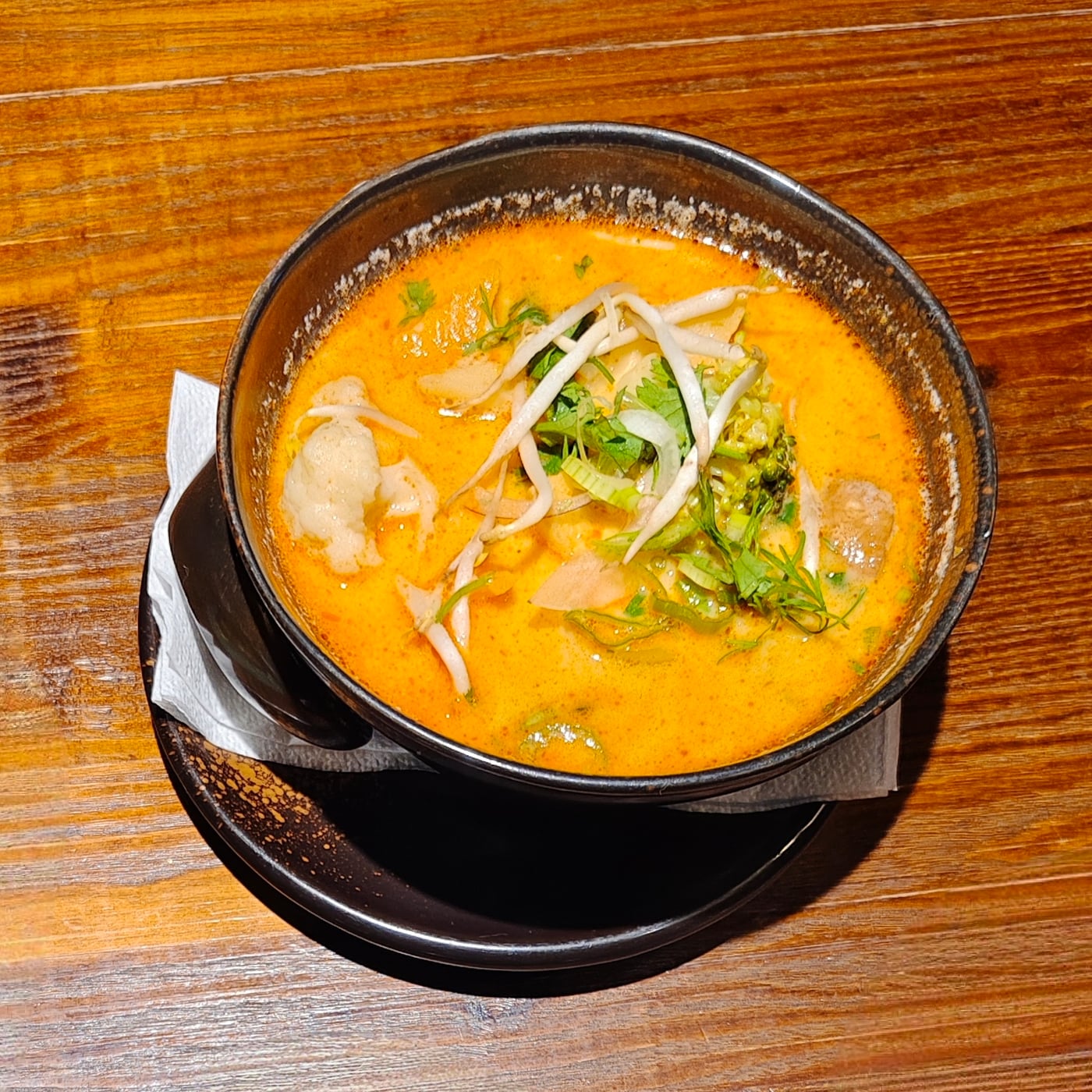
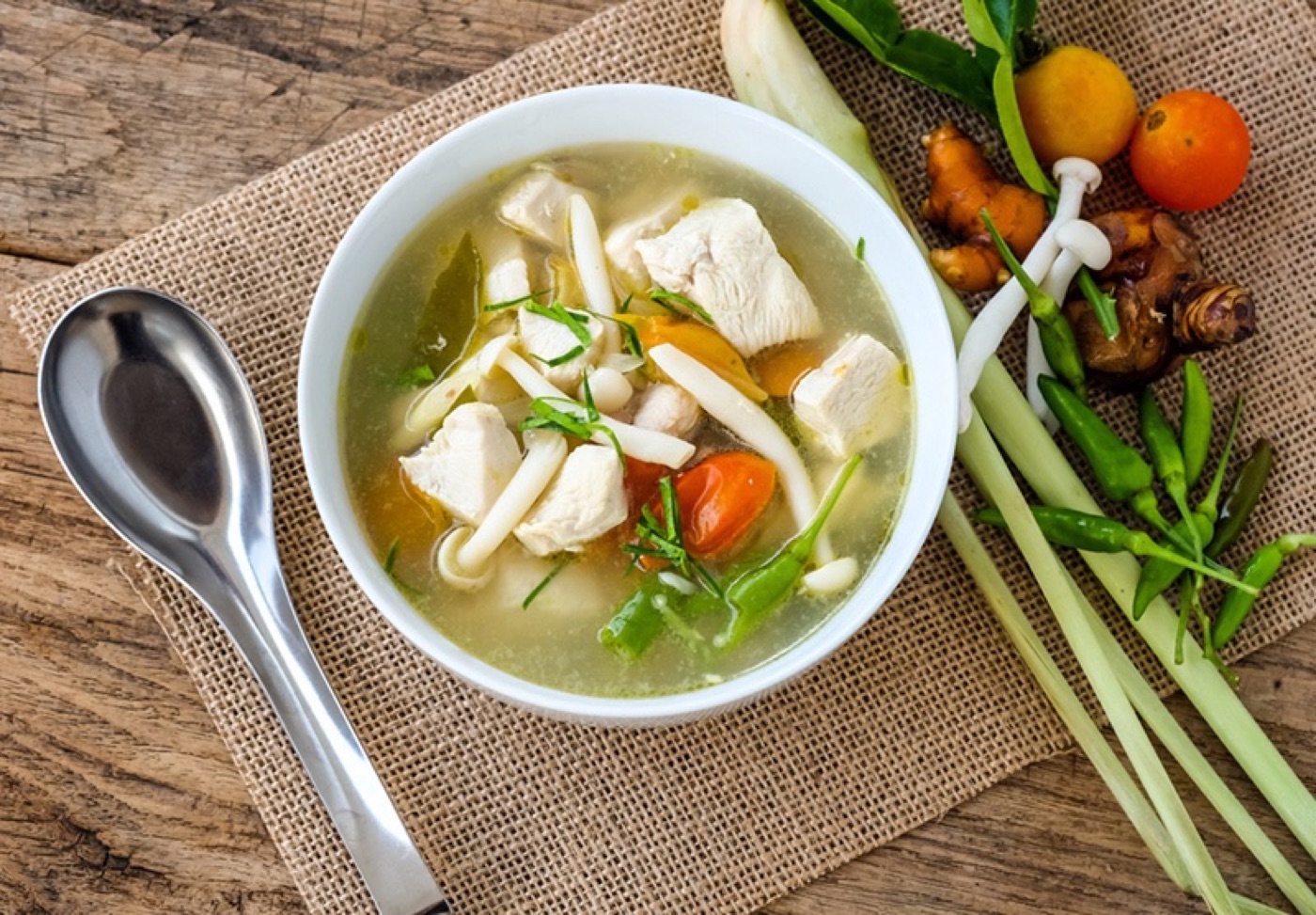
Makrut lime leaves (Thai bai makrut, ใบมะกรูด; long sold in the West as kaffir lime leaves, a name now avoided as a slur) are the glossy, dark green, double-lobed leaves of a knobbly Southeast Asian lime. Their smell is intensely floral and citrusy—closer to lime zest and lemon blossom than to the juice—and they carry that perfume into tom yum, tom kha, panang and green curry, Thai fish cakes, Malaysian rendang and Indonesian laksa.
How to buy
Fresh leaves are sold in small bags at Thai and Vietnamese grocers and larger Asian supermarkets (H Mart, 99 Ranch, Wing Yip), and increasingly at Whole Foods and online from Thai importers. Look for deep green, glossy, unblemished leaves that feel oily when rubbed. Frozen leaves from the Asian grocer's freezer are almost as good and are the sensible default if you cook Thai food monthly rather than weekly. Dried leaves (McCormick, Thai Kitchen, most supermarket spice racks) have lost most of their aroma; treat them as a last resort and use twice as many.
How to store
Fresh leaves keep a week in the fridge in a sealed bag, 2–3 weeks if there is a paper towel inside to absorb moisture. Freeze the rest flat in a zip bag: they keep 6–12 months and can be torn or shredded straight from frozen with no loss of flavor. Yellowing, dry or brittle fresh leaves have faded; discard any that are slimy or black. Dried leaves fade within a year even in a sealed jar.
Substitutes
- Lime zest: the zest of ½ lime per 2 leaves, added near the end. Bright and citrusy but missing the floral, slightly resinous note.
- Fresh bay leaf + lime zest: 1 bay leaf and a strip of lime zest per 3 makrut leaves in curries and braises. Gives body and perfume; less distinctly Thai.
- Lemongrass: 1 stalk per 4 leaves in soups. Lemon-ginger instead of lime-blossom, still Southeast Asian.
- Curry leaves: 1:1 in Malaysian and Indonesian dishes only. Nutty and savory rather than citrusy; not for Thai soups.
How to use
For soups and curries, tear each leaf in half and pull out the tough central rib, then drop the pieces in at the start so they infuse; they stay leathery, so leave them in the bowl rather than eating them. For salads, fish cakes and stir-fries where the leaf will be eaten, stack a few leaves, roll them tightly and slice into hair-thin threads—thick shreds are unpleasantly chewy. Frozen leaves can be shredded straight from the freezer. Four to six leaves flavor a curry for four; do not boil them for hours, which turns the aroma bitter and medicinal.
By Mia Ko · Updated